Nov 17, 2026

Oct 31, 2026
Oct 31, 2026
Oct 29, 2026

Oct 28, 2026
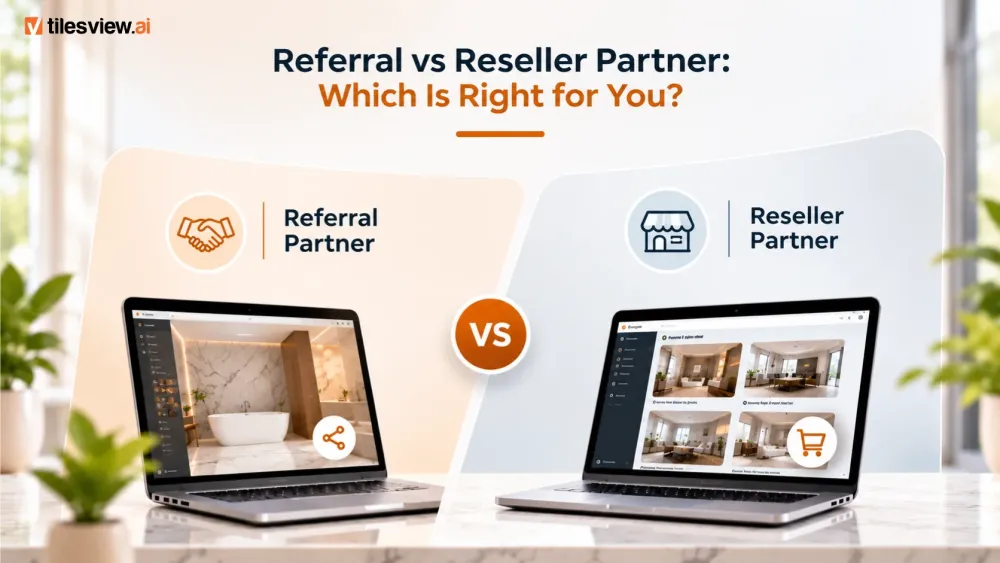
Choosing the right business partnership model can open new revenue opportunities, help you reach more customers, and expand your services without developing an entirely new product. However, before joining a technology partner program, it is important to understand how different partnership models work.
Two popular options are referral partnerships and reseller partnerships. Both allow businesses and professionals to collaborate with technology providers, but they involve different responsibilities, sales processes, and earning structures.
A referral partner introduces potential customers to a company and earns a commission when eligible referrals convert. A reseller partner takes a more active role by selling the provider's solution to customers under agreed commercial terms.
For businesses in the flooring, tiles, interior design, and home improvement industries, both models can create opportunities to offer additional value through digital tools.
In this guide, we will explain the difference between referral and reseller partnerships, compare their benefits and responsibilities, and help you decide which model is right for your business.

A referral partner introduces potential customers to a company and earns a commission when eligible referrals become customers.
The provider handles the remaining sales process, including product demonstrations, negotiations, and onboarding.
Example: An interior designer recommends Tilesview to a tile retailer who wants to offer customers an AI-powered room visualization experience. The Tilesview team handles the sales process after the introduction.
Key Benefits:
A typical referral partnership follows a straightforward process:
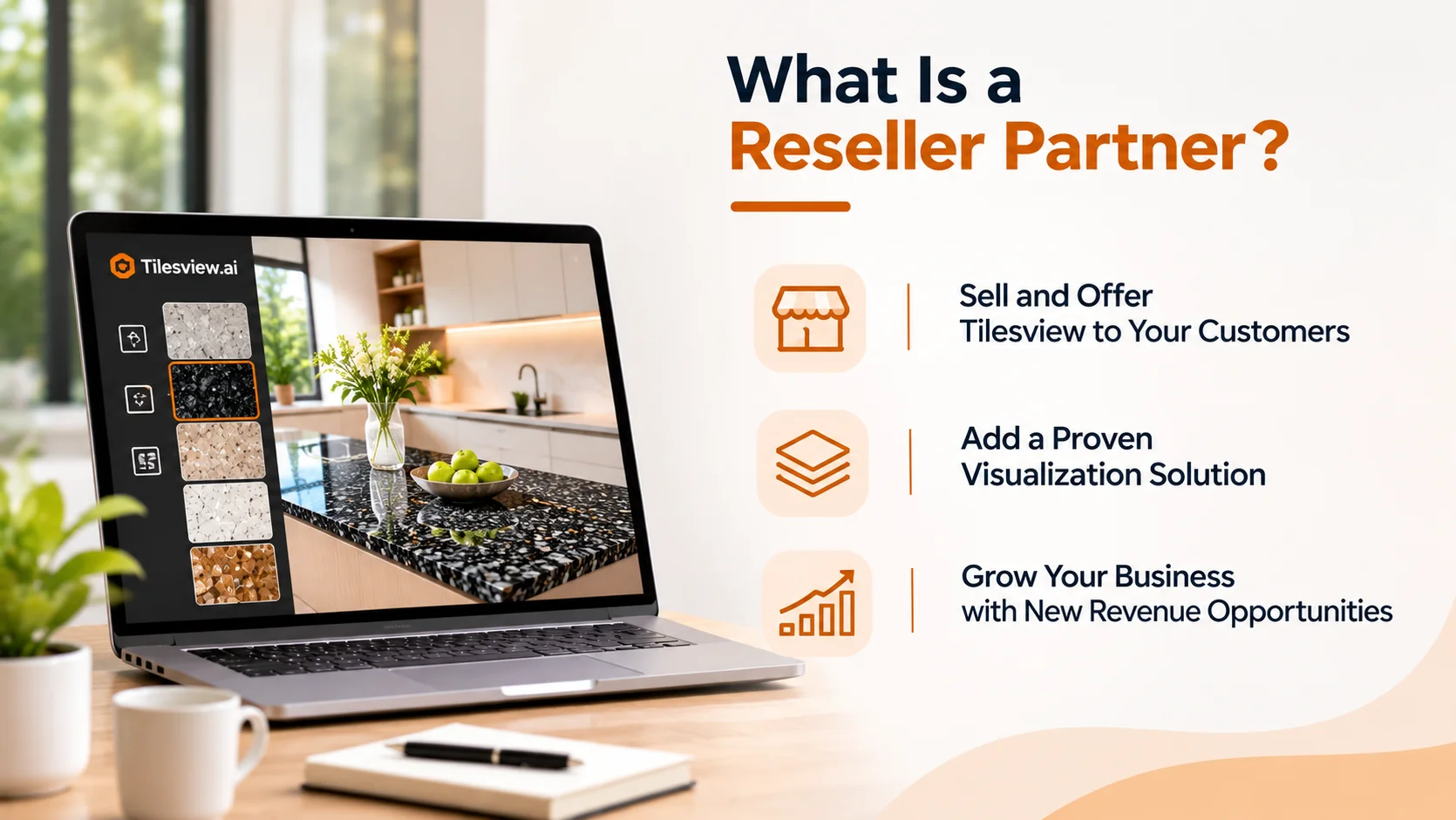
A reseller partner actively promotes and sells another company's products or services to customers under an agreed commercial arrangement.
Unlike referral partners, resellers generally take greater responsibility for sales, customer communication, and relationship management.
Example: A flooring distributor offers Tilesview's visualization software to its retailer network as an additional business solution.
Key Benefits:
A typical reseller partnership may involve the following steps:
| Factor | Referral Partner | Reseller Partner |
|---|---|---|
| Main role | Introduces customers | Sells the solution |
| Sales involvement | Limited | Active |
| Customer management | Mainly provider-led | As agreed with provider |
| Earning model | Referral commission | Reseller margin |
| Responsibility | Lower | Higher |
| Best for | Consultants and professionals | Agencies, distributors, and established businesses |
The right partnership model depends on your business structure, available resources, customer relationships, and long-term goals.
Let's look at which model may suit different types of businesses and professionals.
A referral partnership may be the right option if you have a strong professional network but do not want to manage the entire sales process.
Consider this model if you are:
For example, an interior designer may recommend Tilesview to a tile retailer who wants customers to preview products in realistic room settings. The designer introduces the retailer, and the Tilesview team handles the product demonstration and remaining sales process.
This approach allows the designer to create an additional business opportunity without becoming responsible for selling or managing the software.
A reseller partnership may be more suitable if you already have a customer base, sales team, or established business operations.
Consider this model if you are:
For example, a flooring distributor could introduce Tilesview to its network of retailers as an additional digital solution. Retailers can use room visualization technology to help customers explore flooring options before purchasing.
The distributor can offer a more complete solution to its customers while building an additional revenue opportunity through the agreed reseller arrangement.

Tilesview is an AI-powered product visualization platform that helps businesses showcase products in realistic spaces. Its solutions support product visualization across categories such as tiles, flooring, paint, wall coverings, rugs, countertops, and other home improvement products.
Through its Partner Program, Tilesview offers opportunities for businesses and individuals interested in referral, reseller/white-label, and strategic partnerships.
Explore the Tilesview Partner Program
The referral model is suitable for professionals and businesses that can identify potential customers for Tilesview but prefer to leave the sales process to the Tilesview team.
According to Tilesview's published partner terms, referral partners submit leads through an approved channel. Tilesview handles demonstrations, proposals, negotiations, onboarding, and closing.
Eligible referral commissions are based on the approved commercial agreement. The published terms specify that commissions apply to eligible subscription payments actually received by Tilesview during the first eight months of a customer's subscription. Rates, payment schedules, and eligibility requirements should be confirmed in the partner agreement.
The reseller model is intended for partners who want to take a more active role in introducing and selling Tilesview solutions.
Businesses can explore this opportunity if they already serve manufacturers, retailers, distributors, or other home improvement professionals.
Reseller pricing, margins, billing responsibilities, and sales or delivery expectations must be agreed upon in writing with Tilesview before the partnership begins.
The exact responsibilities depend on the approved agreement, so prospective partners should discuss their intended business model with the Tilesview team.
Ready to explore a partnership with Tilesview?
Visit the Tilesview Partner Program to learn more and discuss the right collaboration opportunity for your business.
Referral partners introduce potential customers, while reseller partners actively promote and sell products or services.
Referral partnerships generally require less sales involvement and fewer operational responsibilities.
Yes. Consultants, designers, architects, and other professionals can explore referral opportunities, subject to program requirements.
Established businesses, distributors, agencies, and professionals with sales capabilities may benefit from reseller partnerships.
Visit the Tilesview Partner Program page and submit your partnership enquiry.

Anand Bhoraniya is a technology entrepreneur and visualization innovator at Tilesview, specializing in AI-powered room visualization software for tile, flooring, paint, and wall covering brands. He regularly shares insights on AI visualization trends, virtual showroom experiences, personalized design technology, warm minimalist interiors, and photorealistic room design solutions.
Get the latest insights on room visualizer, interior design trends, and product updates delivered to your inbox.
No spam. Unsubscribe anytime.